Showing posts with label indigenous. Show all posts

Jan 6, 2012

Ryukyu Land Leech (Taipei)

English Name: Ryukyu Land Leech, Ryukyu Mountain Leech
Scientific Name: Haemadipsa rjukjuana
Chinese Name: 琉球山蛭 (liu2 qiu2 shan1 zhi4)  
Chinese Meaning: "Ryukyu Mountain Leech"

Ryukyu Land Leech (Haemadipsa rjukjuana)
Date: October 24, 2011
Location: Maokong Yuanshan, Wenshan Districty, Taipei City 
Coordinates: 24° 58' 8" N, 121° 36' 04" E

Taiwan is a paradise for nature walks, but hikers sometimes have to deal with the nuisances of the tropical forest - mud, mosquitos, and leeches. Contrary to popular belief, not all leeches are bloodsuckers. Some of these earthworm-relatives in fact prefer to hunt small prey that they can swallow whole, such as worms or small snails. Of those that do feed on blood, most in fact do not attack humans, instead preferring to attach to water snails, fish, and frogs. However, Myth #2 about leeches is less comforting: in reality, not all leeches live in the water. Some species, such as the one pictured here from the land leech family Haemadipsidae, are fully adapted to life on land, waiting on moist plants for a passer-by to provide their next meal.

Foraging Ryukyu Land Leech (Haemadipsa rjukjuana) with body
extended (left) and contracted (right)

This leech species is named after the Japanese Ryukyu Islands just northeast of Taiwan, and is also found in much of Southeast Asia. It's an active hunter, spending its time near the forest floor, waiting for large mammals like humans or dogs to come near. It has a disconcerting habit of stretching its body up off the ground and waving its head around in the air, searching for a meal using its complex sensory system, which can detect changes in vibration, airflow, brightness, and temperature. Once it zeroes in on a target, it crawls inchworm-style along the ground or vegetation, then up onto the body of the new host, looking for areas of soft skin to bite into. Although it has no problem moving on land, it does require a moist environment, and it can usually be avoided by making sure not to brush your feet up against wet plants.

Ryukyu Land Leech (Haemadipsa rjukjuana) feeding on human blood.

As a kid, I always thought that leeches drank blood using big suckers on their heads. However, I recently learned that the large sucker on the fat end of the leech is actually its tail (seen on the right in the photo above), which it uses to hang on while it feeds with a much smaller sucker on the small end, which is actually its head (seen on the left). The dried blood on the far right of the photo is from a separate bite, inflicted by the leech from the first photo. You don't feel a thing when the leech bites, but the wound continues bleeding for awhile after it detaches, because of a chemical called hirudin that the creature injects into your blood. The next day, the area swells up into a bump like a mosquito bite, and keeps itching for a week or more. For information on how to remove a leech from your body and treat the bite, see this Wikipedia article.

More photos:


Note: Special thanks for this entry go to a wonderful book called Leech Fauna of Taiwan by Yi-Te Lai & Jiun-Hong Chen. Although it's written for academic audiences, it's a great guide for dedicated amateur naturalists as well. If you're on a tight budget or can't get to a library, most of the information from the book can also be found online at the Biota Taiwanica website (leeches are farther down the list, after all the earthworms).

Dec 2, 2011

White-lipped Tree Frog (Taipei)

English Name: White-lipped Tree Frog, "Brown Tree Frog"*, Brauer's Tree Frog**
Scientific Name: Polypedates braueri (Polypedates megacephalus)**
Chinese Name: 白頷樹蛙 (bai2han4 shu4wa1)
Chinese Meaning: "White-Chinned Tree Frog"

White-lipped Tree Frog (Polypedates megacephalus)
Date: May 24, 2010
Location: Shiyuan Rd., Wenshan District, Taipei City
Coordinates: 24° 59' 24" N, 121° 32' 58" E

One day about a year and a half ago I ran into this tree frog while returning home to our old apartment. It was just sitting there on the sheet-metal wall that separated our driveway from the empty lot next door. I was a bit surprised by its size - it was easy three inches or more from nose to tail. This was my first and only time encountering an adult of this species, though it is reported to be fairly common in Taiwan and China.** A closely related species, Polypedates leucomystax (also sometimes known as the White-lipped Tree Frog), is found throughout most of South and Southeast Asia. Tree frogs in the genus Polypedates are sometimes known as "whipping frogs," apparently due to the masses of foam that they "whip up" to protect their eggs, laid just above areas of standing water. This method of reproduction, which relies on the tadpoles falling or getting washed into the water below, is actually also typical of many other kinds of frogs in the Old World tree frog family Rhacophoridae.

Tadpole of White-Lipped Tree Frog (Polypedates megacephalus)
Date: June 5, 2011
Location: Hemeishan Nature Trail, Xindian District, New Taipei City
Coordinates: 24° 57' 11.6" N, 121° 31' 59.3" E

One year later, I got the chance to see the species in its larval stage while on a walk in the hills a few kilometers away. I discovered one or two tree frog tadpoles swimming in a small pool of water along with a big crowd of the smaller, hexagon-headed young of the Ornate Narrow-Mouthed Frog (Microhyla fissipes (ornata)). Like the adult frog, White-lipped Tree Frog tadpoles are relatively large - this one must have been about two inches long - and they are also recognizable by their dark body color and characteristic white patch at the tip of the snout.

More photos:


*The term "Brown Tree Frog" is often used for both this frog and another species found in Taiwan, Buergeria robusta, not to mention at least one species from elsewhere in the world. To avoid confusion, I have chosen to use another of the common names of Polypedates megacephalus here.

**The native Taiwan variety of this frog has been renamed Polypedates braueri ("Brauer's Tree Frog"). The name Polypedates megacephalus, used until very recently for these frogs in Taiwan, is still in use for the similar frogs found in Hong Kong and southern China. Confusingly, that variety was also introduced to Taiwan in 2006, becoming an invasive species on the island, so now Taiwan has both P. megacephalus and P. braueri. Based on descriptions and distribution maps, I believe the frogs in these photos are the native variety, P. braueri.

Oct 5, 2011

Siamese Rhinoceros Beetle (Orchid Island/Lanyu)

English Name: Siamese Rhinoceros Beetle (Philippine subspecies)
Scientific Name: Xylotrupes gideon philippinensis
Chinese Name: 姬獨角仙 (ji1 du2 jiao3 xian1), 菲律賓姬兜蟲 (fei1 lü4 bin1 ji1 dou1 chong2), 
Chinese Meaning: "Gideon's Single-Horned Fairy", "Philippine Gideon's Dou Bug"

Male rhinoceros beetle (Xylotrupes gideon philippinensis)
Date: August 8, 2010
Location: Road near Yeyin Village, Orchid Island (Lanyu), Lanyu Township, Taitung County
Coordinates: 22° 02' 25" N, 121° 33' 57" E

Orchid Island - also known by its Mandarin name, Lanyu - is an island located just southeast of Taiwan. Though controlled by the Taiwanese government, it is ecologically and culturally a transition area between Taiwan to the northwest and the Philippines to the south. The people here have their own culture and speak a unique non-Chinese language, and the island's ecosystems are home to a number of endemic species. Though not endemic itself, I was delighted to come across this beautiful insect on a night-time walk on Orchid Island last year.

Female rhinoceros beetle (Xylotrupes gideon philippinensis)
Date: August 8, 2010
Location: Road between Dongcing and Yeyin Villages, Orchid Island (Lanyu), Lanyu Township, Taitung County
Coordinates: 22° 02' 52" N, 121° 33' 43" E

This species, which ranges across much of Southeast Asia to Australia, is probably best known to Westerners as the Siamese "fighting beetle", for its role in staged insect fights in northern Thailand and surrounding countries. Apart from bringing in gambling revenue, it is also prized as a pet in many areas. This particular subspecies is limited in range to the Philippines and southeastern Taiwan, and is sometimes known to Taiwanese as the "Lanyu rhinoceros beetle" due to the fact that it is commonly found on Orchid Island, with only much smaller populations existing in other parts of Taiwan. The colloquial Chinese word for "rhinoceros beetle" literally translates as "Single-Horned Fairy" (獨角仙).

Top view: male rhinoceros beetle (Xylotrupes gideon philippinensis)
There are over 300 species of rhinoceros beetle worldwide, most of which share a similar life cycle: a year or more spent underground as a grub eating rotting wood, followed by a 2-4 month long adult life of mating and feeding on fruit and nectar. Despite its reputation as an aggressive fighter in the ring, the Siamese rhinoceros beetle is harmless to humans, and relies on its ability to produce a hissing noise to scare away large predators. Unfortunately, hissing won't protect it from the growing number of motor scooters in use on Orchid Island's roads, where it makes itself vulnerable by coming out to mate under the street lights from May to August.

Dec 27, 2010

Mock Viper (Taipei)

English Name: Mock Viper
Scientific Name: Psammodynastes pulverulentus papenfussi
Chinese Name: 茶斑蛇 (Chaban She)
Chinese Meaning: "Tea-Striped Snake"

Date: May 12, 2010
Location: Mt. Xinglong, Wenshan Dist., Taipei City
Coordinates: 24° 59' 44.7" N, 121° 34' 6.7" E

I encountered this snake while wandering through a bamboo patch looking for the hiking trail to cross Xinglong Shan, a hill about 90m high in Southern Taipei (near MRT Wanfang Community Station). It was slithering through the undergrowth, and stopped long enough for me to line up some cool telephoto shots. It's a small snake that only grows to a couple feet long. Known as the "Mock Viper" because its triangular head resembles a poisonous viper, it's actually only very mildly venomous. It's a rear-fanged (opisthoglyphous) snake, which means that it only has small fangs in the back of its mouth. If it does bite, it's only known to cause mild pain and swelling in the bite area (usually your finger, since it has to get its jaws around you in order to nab you with the rear-mounted fangs).


The Mock Viper is a pretty common snake, found throughout most of Southeast Asia, west into India and Nepal, and north into southern China and Taiwan. It lives mostly on the ground and eats frogs, lizards, and occasionally other snakes. Like many snake species, it's ovoviparous, which means that its young develop inside eggs, but the eggs hatch inside the mother's body and the little snakes are born live. This particular subspecies, P. p. papenfussi, is only found in Taiwan, but it's not clear to me what differentiates it from the one other subspecies that lives everywhere else.


Whenever I see a new reptile or amphibian, I try to get some top-down shots like this of its back, because they tend to be useful in identifying the species. Out of the world's nearly 3,000 snake species, about 50 can be found in Taiwan (apparently St. Patrick never made it over here), so I need to get as much information as I can in order to match it to a species. The first place I go is usually a guidebook from the local library. But there's also a really great Snakes of Taiwan website, which has the added benefit of offering both Chinese and English, and lots of pictures.

Apr 7, 2010

Formosan Rock Monkey (Kaohsiung)

English Name: Formosan Rock Monkey, Formosan Macaque
Scientific Name: Macaca cyclopis
Chinese Name: 台灣獼猴 (Taiwan Mihou), 黑肢猴 (Heizhi Hou)
Chinese Meaning: "Taiwan Macaque", "Black-Limbed Monkey"


Date: February 12, 2010
Location: Chaishan Park, Gushan District, Kaohsiung City
Coordinates: 22° 39' 22" N, 120° 16' 11" E

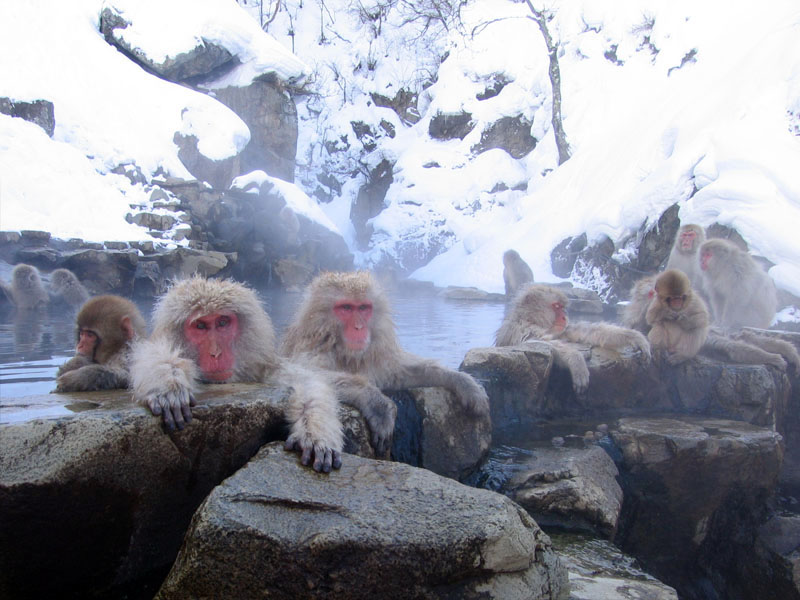
The Formosan macaque (or rock monkey) is a species of monkey found naturally only in Taiwan (though there are some introduced colonies in Japan). It is also the only species of monkey or ape found in Taiwan, other than humans. Although the monkeys living in Taiwan are a unique species, they are closely related to other species of macaques, such as the Japanese "snow monkeys" and the "Barbary apes" found in North Africa and the Rock of Gibraltar (the only monkeys in Europe). Formosan macaques live in groups called "troops". It's reported that in the past they roamed Taiwan in groups of 100 or more, but now each troop usually has no more than a dozen members. Due to human interference, monkeys are now found only in the hills and mountains of Taiwan, but they are not especially endangered, due to their protected status under Taiwanese and international laws.


I finally got to see some monkeys when we went to Chaishan Park in Kaohsiung, also known by the names Shoushan and "Monkey Mountain", because it's well known for being home to many monkeys living close to the city (the Dutch colonists called it "Ape Hill"). When we first started on the trails, we didn't see any monkeys, and we were a little discouraged, but sure enough, when we walked far enough up the hill, we finally found a troop hanging out. They didn't seem to be afraid of humans at all. I was able to get very close to take pictures, though I was careful not to provoke them or stare into their eyes, because the park signs warned us not to. I caught this funny shot of one monkey panicking as another monkey almost falls off a tree branch:


Monkeys and humans in Taiwan don't always get along. The monkeys in Kaohsiung, in fact, have a reputation for being hostile to humans. There were apparently some monkey attacks on humans a few years back, though they seemed perfectly docile when we visited. In other parts of Taiwan, monkeys sometimes clash with villagers when they raid farms for food. In places like Kaohsiung, people will sometimes feed them on purpose. This can sometimes cause problems, because the monkeys become more reliant on food from people, and there are more opportunities for clashes. In the wild, Formosan rock monkeys eat things like fruit, leaves, and insects. There is also some illegal hunting of monkeys in Taiwan, but overall the species seems to be doing quite well, with the number of monkeys recently growing from previous years.

Note: A lot of the information for this post comes from the IUCN Redlist page for the species. The IUCN is the international organization that keeps track of which species are endangered or not endangered.

Dec 18, 2009

Taiwan Whip Scorpion (Taipei)

English Name: Taiwan Whip Scorpion
Scientific Name: Typopeltis crucifer
Chinese Name: 台灣鞭蠍 (Taiwan Bianxie), 醋酸蟲 (Cu Suan Chong)
Chinese Meaning: "Taiwan Whip Scorpion", "Acid Bug"


Date: October 19, 2009
Location: Shiyuan Rd., Wenshan District, Taipei City
Coordinates:  24° 59' 24.13" N, 121° 32' 58.34" E

I spot these guys running around in the alley every once in awhile. They're pretty scary looking - the body's about the size of a man's thumb, and they can run like heck. However, whip scorpions aren't dangerous to people, unlike true scorpions, which don't live in Taiwan. Whip scorpions do have a defense weapon though - when cornered, they're able to spray acid out their back end. For a human, this might just irritate your skin a little bit, but if an animal gets it in its eye, it could hurt a lot. This acid-spraying is what earns the creature its Chinese nickname, "Acid Bug", and also its alternative English name, "Vinegarroon".


Date: November 26, 2009
Location: Shiyuan Rd., Wenshan District, Taipei City
Coordinates:  24° 59' 24.13" N, 121° 32' 58.34" E

Despite apparently being pretty common, it's a little bit hard to find a lot of information about whip scorpions in Taiwan. The website I usually go to for complete listings of species doesn't mention the whip scorpion group at all. But I was able to find some blogs and other sites in Chinese which allowed me to identify the species, though even they claimed that little research has been done on these creatures in Taiwan since the first half of the 20th Century.

Whip scorpions are not insects, but arachnids, like spiders, scorpions, mites, and ticks. There are around 100 species of whip scorpions worldwide, but it seems that there is only one species known to exist in Taiwan. Although the websites I found called this species the "Taiwan Whip Scorpion", it is also found in parts of Japan. In the Western world, it is known mainly as an exotic pet.

Nov 6, 2009

Malayan Night Heron (Taipei)

English Name: Malayan Night Heron
Scientific Name: Gorsachius melanolophus
Chinese Name: 黑冠麻鷺 (Heiguan Malu)
Chinese Meaning: "Black-Crowned Ma Heron"*


Date: September 11, 2009
Location: National Chengchi University, Wenshan District, Taipei City
Coordinates: 24° 58' 47.77" N, 121° 34' 13.86" E

I spotted this bird near one of the dormitory buildings up on a hill at Chengchi University. It's a juvenile of the species; adults are more solid brown on top, with a black patch on top of their heads. The Malayan Night Heron is found in much of South and Southeast Asia, from India to Indonesia to China. There are three species of night herons found in Taiwan, and seven worldwide. The Black-Crowned Night Heron, one of the species seen locally, is found all over the world. Scientists have also discovered fossils of other species of night herons, and five island species have gone extinct in modern times.


(Same date and location as above)

The Malayan Night Heron is a forest-dwelling species. It likes to hang out in dark, moist forested areas. This one was being stalked by a cat. I first noticed it after it made a bunch of noise escaping from the cat, and landed on this tree branch (you can see the cat in the bottom right of this picture).

*Translation Note: I didn't translate the "ma" (麻) character, because it's part of the name of a certain group of herons for which there is apparently no word in English. "Malu" (麻鷺) refers to this and several closely related species of night herons of the genus Gorsachius, especially the Japanese Night Heron (Gorsachius goisagi). Other genera of night herons are not referred to as "malu", and the name is also used for some more distantly related birds in the heron family. The character "ma" (麻) by itself has a variety of possible meanings, including "tingling", "hemp", "flax", and "bother".

Oct 27, 2009

Cicadas (Taipei)

According to an Academia Sinica website, Taiwan is home to 59 species of cicadas, more than half of which are found only here. Cicadas are large insects, but they're often difficult to spot because they hide in trees and bushes. However, the constant noisy buzzing sound they make is familiar to anyone who lives nearby them.

English Name: Cicada species
Scientific Name: Euterpnosia sp.? 
Chinese Name: 姬春蟬 (Jichun Chan)
Chinese Meaning: Roughly "Beautiful Springtime Cicada"


Date: September, 2009
Location: Zhangshan Temple Hiking Trail, Wenshan Dist., Taipei City
Coordinates:  24° 58' 29.01" N, 121° 34' 45.43" E

I found this one lying dead on the side of stone paved hiking trail that goes from National Chengchi University to Zhanshan Temple on the southern edge of the city of Taipei. Unfortunately, I didn't take a picture of its back, which would have helped identify the species; but based on the photos at the NTU Insect Museum website, I'm guessing that it's a member of the Euterpnosia genus, which includes a quarter of all the cicada species in Taiwan (all known in Chinese as "Jichun Chan"). In the second picture, check out the the three little red dots halfway between the eyes (click on the picture to enlarge it); these are actually miniature eyes, called ocelli, used for sensing light. All cicada's have these three extra eyes. Cool!

English Name: Cicada species
Scientific Name: Meimuna sp. (likely M. opalifera)
Chinese Name: 寒蟬 (Han Chan)
Chinese Meaning: "Winter Cicada"


Date: September 23, 2009
Location: Shiyuan Rd., Wenshan District, Taipei City
Coordinates:  24° 59' 24.13" N, 121° 32' 58.34" E

I encountered this one buzzing around confusedly in the alleyway that leads up to my home. I'm pretty confident that it's a member of the Genus Meimuna, and I think it's probably Meimuna opalifera, the "Winter Cicada". This species is found in many parts of East Asia, but it has several close relatives which are found only in Taiwan.

English Name: Cicada species (molted exoskeleton)
Scientific Name: Family Cicadidae 
Chinese Name: 蟬 (Chan)
Chinese Meaning: Character means "cicada" or "continuous"


Date: September 11, 2009
Location: National Chengchi University, Wenshan District, Taipei City
Coordinates:  24° 58' 47.77" N, 121° 34' 13.86" E

When cicadas first emerge from the ground as larvae, they have to "molt", or shed their exoskeleton (an insect's hard outer skin) before they can take on their full adult form. Here's a discarded exoskeleton left attached to a tree. This photo was taken outside of the ZihCiang Residence Hall building on the NCCU campus. In North America, some species of cicadas are seen only once every 17 years, because the entire species spends almost 17 years under ground growing as larva before they all emerge and reproduce at the same time, only for their offspring to then spend the next 17 years under ground. These are called "periodical" cicadas. In Taiwan however, all of the cicada species are all "annuals", meaning there's a new batch of them every year.

Oct 22, 2009

Five-striped Blue-tailed Skink (Taipei)

English Name: Five-striped Blue-tailed Skink
Scientific Name: Eumeces elegans (Plestiodon elegans)
Chinese Name: 麗紋石龍子 (Li Wen Shilongzi)
Chinese Meaning: "Elegant Striped Little Rock Dragon"


Date: October 21, 2009
Location: Xianji Yan Hiking Trail, Wenshan District, Taipei City
Coordinates: 24° 59' 27.33" N, 121° 32' 44.05" E

These guys are less common and harder to spot than the grey and brown lizards that you see all over the place. They're also extra skittish - the first few times I saw them, I didn't get the chance to take a picture. I've mostly come across them on the slopes of the mountain in Jingmei, but once I spotted one briefly on the Chengchi University campus. This one was basking in the sun on the stairs up to the main trail from the Buddhist Temple near Shih Shin University.


Date: September 26, 2009
Location: Xianji Yan Hiking Trail, Wenshan District, Taipei City
Coordinates:  24° 59' 28.04" N, 121° 32' 39.96" E

This photo's from an earlier encounter. It's not as clear, but you can see the blue tail really well. This one was on the main path that leads up the mountain from Jingmei Night Market. What a beautiful creature!